Browser-based tracking is losing more data than most marketing teams realize. Ad blockers, privacy restrictions, and cookie limitations are breaking traditional analytics models. Server-side tracking introduces a more reliable, privacy-first, and performance-driven way to measure user behavior and campaign impact. Ready to discover how accurate marketing analytics is built for the next generation?
As the marketing landscape becomes increasingly data-driven and privacy-conscious, businesses are seeking smarter ways to measure performance without compromising user trust or accuracy. In this evolving digital ecosystem, server-side tracking has emerged as a revolutionary solution for marketers who demand accurate marketing analytics, reliable attribution, and greater control over data pipelines.
The traditional methods of tracking user behavior on websites and apps are under siege. Browsers like Safari and Firefox now block third-party cookies by default, and Google Chrome is expected to fully phase them out in 2025. Meanwhile, iOS 17 and GDPR have made consent-based, first-party data collection the new gold standard. These shifts have rendered client-side tracking increasingly unreliable. Marketers who continue to depend on browser-based scripts like Google Analytics, Facebook Pixel, or TikTok Tag are seeing data loss, inflated bounce rates, and underreported conversions.
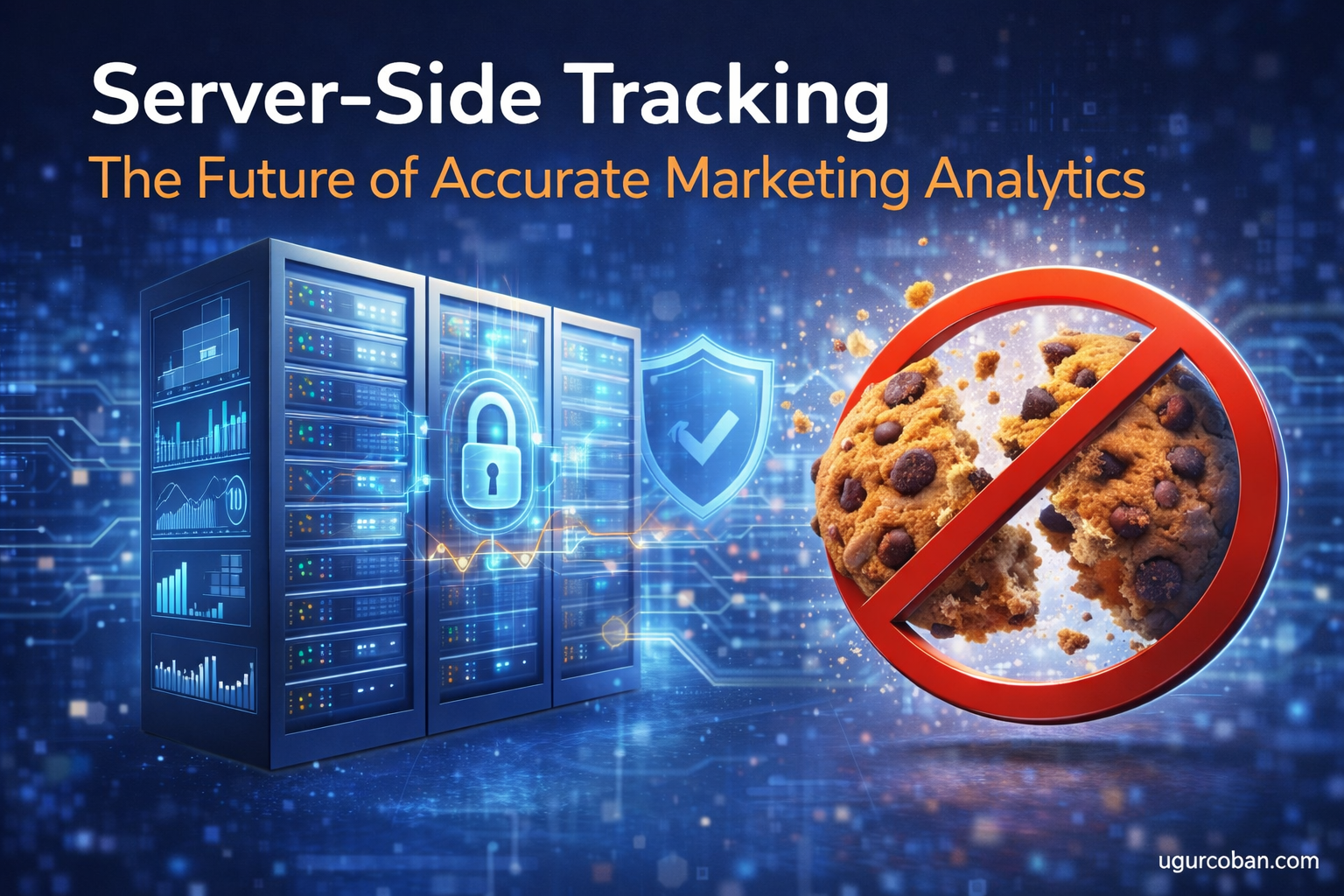
Enter server-side tracking, a robust solution where events are sent to marketing platforms directly from your server, rather than the user’s browser. This allows brands to maintain data integrity, enhance user privacy, and increase attribution accuracy, all while future-proofing their tech stack. At the heart of this approach lies tools like Google Tag Manager Server (sGTM) and Meta Conversion API (CAPI), which enable seamless, secure, and scalable measurement.
The core concept behind server-side tracking is simple but powerful. When a user performs an action on your website or app—such as viewing a product, adding to cart, or completing a purchase—this data is first collected by your backend servers. Instead of relying on a pixel to load and report the event from the browser, the server processes the event in a secure container and sends it directly to marketing platforms like Google Ads, Meta, TikTok, Snapchat, or your own CRM. This ensures that the data is not lost due to ad blockers, browser restrictions, or slow networks.
One of the biggest advantages of server-side tracking is control. You decide which events are tracked, how they’re enriched with user data, and which platforms receive them. For example, a server-side implementation allows you to attach hashed emails or user IDs to conversion events, enabling powerful cross-device attribution and remarketing. This is something browser-based pixels simply cannot achieve with the same accuracy anymore.
Another major benefit is performance. By removing third-party scripts from the browser, server-side setups significantly improve page load speeds, which in turn enhances SEO performance and conversion rates. Faster-loading pages lead to better user experience and longer time-on-site. Your pages are no longer burdened by multiple tags that compete for resources, which can easily delay rendering times by several seconds.
With server-side tracking, data security and compliance also receive a major upgrade. Since user data does not pass through third-party tools on the client side, the risk of data leakage is minimized. This aligns with GDPR, CCPA, and other privacy frameworks, especially when used in combination with a Consent Management Platform (CMP). It gives your organization a privacy-first architecture, which is increasingly becoming a competitive advantage and regulatory necessity.
Implementing server-side tracking does require a more technical setup than traditional pixels. You need a cloud server environment (such as Google Cloud, AWS, or Stape.io) to host the GTM server container. You also need to configure your backend to send events and data points like user_id, event_name, page_path, or value to the server container in real-time. Many marketers partner with their development teams or use ready-made infrastructure providers to speed up the deployment.
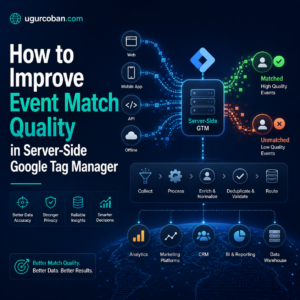
For example, Google Tag Manager Server provides a container hosted in your own environment that processes all tracking requests. It acts as a middle layer between your site/app and marketing endpoints. Instead of sending a purchase event from the browser, your backend sends it to the GTM server container, which can then format and forward that event to Google Ads, Google Analytics 4, Meta CAPI, and any other tool you configure inside the container. This provides complete observability, filtering, and transformation of the data stream.
One of the most widely adopted use cases is Meta Conversion API (CAPI). With iOS restrictions and browser limitations, Meta Pixel alone captures less than 50 percent of purchase events in many cases. By integrating Meta CAPI server-side, brands have seen up to 30 percent increase in reported conversions, and better return on ad spend (ROAS) due to more optimized ad delivery. Meta also allows you to combine pixel and server events for event deduplication, ensuring that no conversion is double counted.
TikTok also provides a similar server-side integration through Events API, enabling better tracking of lower funnel actions like checkout or payment success. When deployed correctly, this helps TikTok’s algorithm understand which users are more likely to convert, improving the smart audience building and performance of TikTok Ads.
Beyond the major ad networks, server-side tracking is now being adopted across email marketing, CRM platforms, affiliate networks, and analytics tools. With the growing popularity of Customer Data Platforms (CDPs) like Segment, mParticle, and Rudderstack, marketers can stitch server-side data across multiple channels, devices, and sessions to create unified customer profiles and real-time journey triggers.
Another exciting development is the use of event enrichment. With server-side tracking, you can augment basic event data with additional information such as geo-location, device type, referral source, and product categories. This enriched data can be pushed into your analytics dashboards, CRM systems, or AI models to drive smarter segmentation and targeting.
For companies that rely heavily on affiliate marketing or marketplace platforms, server-side tracking ensures reliable attribution even when redirects or deep links are involved. It also helps solve the common issue of postback loss or misfiring, especially in mobile environments where app tracking is more restricted.
Despite its benefits, there are some challenges to address. Server-side tracking is not a plug-and-play solution for most brands. It requires collaboration between marketing, engineering, and data teams, and the learning curve can be steep. Cost is another consideration, especially if you are hosting containers on cloud services with high volumes of traffic. However, the long-term gains in data reliability, ad performance, and privacy compliance far outweigh these initial investments.
To ensure a smooth transition, it is important to start small. Identify your most critical conversion events—such as checkout completed or lead submitted—and begin by tracking those via server. Over time, you can add more events, user properties, and marketing endpoints. Use tools like Postman, Google Tag Assistant, and Meta Events Manager to test your server-side setups thoroughly before going live.
Looking ahead, the era of browser-based pixels is clearly coming to a close. With increasing limitations on JavaScript tracking and cookie usage, server-side data collection will become the new norm. As artificial intelligence, personalization, and real-time marketing continue to evolve, server-side infrastructure will be the foundation that powers it all. Brands that adopt this shift early will gain a measurable edge in performance, attribution, and user trust.
In summary, server-side tracking is not just a workaround for cookies—it is a strategic enabler for modern marketing analytics. It provides clean, enriched, privacy-compliant data pipelines that drive better decision-making and higher return on ad spend. Whether you’re a startup scaling your funnel or an enterprise managing millions in ad spend, server-side tracking is the future-proof investment your marketing team cannot afford to ignore.