Search, advertising, and personalization are entering a new era shaped by artificial intelligence and privacy-first regulations. Google’s Search Generative Experience, AI-powered ranking systems, and stricter data policies are rewriting the rules of digital growth. Adapting to this new landscape is no longer optional. Ready to explore how modern brands navigate AI-driven search and privacy-first marketing?
The digital marketing landscape is no longer just shifting; it is being completely rewritten. As we move further into 2025, the strategies that guaranteed traffic and conversions just two years ago are becoming obsolete. For marketers and business owners, the challenge is no longer about “being online”—it is about surviving the transition to an AI-first, privacy-centric web.
If you are looking to future-proof your digital strategy, you must look beyond basic social media posting and keyword stuffing. This guide dives deep into the critical trends shaping the industry, from Google’s Search Generative Experience (SGE) to the absolute necessity of first-party data.
1. The Real Impact of AI: Moving Beyond Content Creation
By now, everyone knows that Generative AI tools like ChatGPT and Claude can write emails and blog posts. However, in 2025, the competitive advantage doesn’t come from using AI to create content; it comes from using AI to predict behavior.
Successful marketers are now leveraging predictive AI to analyze vast amounts of customer data. This allows for:
- Hyper-segmentation: Moving beyond basic demographics to segmenting audiences based on real-time behavior and sentiment.
- Predictive Lead Scoring: Identifying which leads are likely to convert before a human sales representative ever speaks to them.
- Dynamic Pricing and Offers: adjusting pricing or incentives in real-time based on the user’s probability of purchase.
Actionable Tip: Stop using AI just as a copywriter. Start integrating AI-powered analytics tools into your CRM to identify patterns in customer churn and lifetime value.
2. SEO is Changing: Surviving Google’s Search Generative Experience (SGE)
The most significant disruption in digital marketing history is happening right now with Google’s SGE. The traditional “10 blue links” on the search results page are being pushed down by AI-generated snapshots that answer user queries directly.
This creates a “Zero-Click” environment where users get their answers without ever visiting a website. To capture traffic in this new era, your SEO strategy must pivot:
- Focus on Topical Authority: You cannot rank for keywords in isolation. You must prove to search engines that you are an expert on the entire topic. This requires creating clusters of interlinked content that cover a subject exhaustively.
- Optimize for “Perspectives”: Google is placing higher value on human experience to differentiate from AI content. Content that includes personal stories, unique case studies, and “I” statements is ranking higher.
- Answer the “Next” Question: SGE answers the immediate query. To get the click, your content must anticipate and answer the next question the user hasn’t thought of yet.
3. The Death of the Cookie and the Rise of First-Party Data
With global privacy regulations tightening and major browsers phasing out third-party cookies, reliance on rented data (like Facebook Pixel data) is a risky strategy. The era of “stalking” users across the web with retargeting ads is ending.
The solution is First-Party Data strategies. You must own your audience. This means moving users away from rented land (social media platforms) to owned land (your website and email list) as quickly as possible.
Building a Data Moat
To build a resilient marketing ecosystem, focus on:
- Value Exchange: Users will only give you their data (email, phone number) if they receive immediate value. This could be exclusive industry reports, templates, or early access to products.
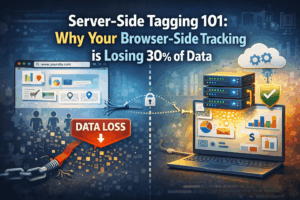
- Server-Side Tracking: Implement server-side tracking (like Google Tag Manager Server-Side) to improve data accuracy and bypass some ad blockers while respecting privacy consent.
4. Video as a Search Engine
Platforms like TikTok and YouTube Shorts are not just entertainment channels; they are search engines. A significant portion of Gen Z and Millennials now starts their product search on TikTok rather than Google.
If your video content isn’t optimized for search, it is invisible. This concept is known as Social SEO.
How to optimize short-form video:
- Keywords on Screen: Place your target keywords text overlay within the video itself. Algorithms read this text.
- Detailed Captions: Write long, keyword-rich captions rather than just a few emojis.
- Verbal Keywords: Speak your keywords out loud in the video. Auto-captioning tools pick this up and index the content accordingly.
5. Hyper-Personalization at Scale
Generic marketing broadcasts are dead. In 2025, personalization goes beyond “Hi [First Name].” It requires delivering the right content, at the right time, through the right channel.
This is where automation and AI converge. Marketing automation platforms can now trigger complex workflows based on granular triggers. If a user watches 50% of a video on your site but doesn’t buy, they should receive a different email sequence than someone who viewed the pricing page.
Key Takeaway: The goal is to make the user feel like the experience was curated specifically for them, not generated by a robot.
Conclusion: Adaptability is the New Currency
The digital marketing landscape of 2025 is less about finding a single “hack” and more about building a holistic ecosystem. It requires a balance between technical prowess (understanding SGE and data privacy) and human creativity (storytelling and brand building).
For brands and marketers, the path forward is clear: Embrace AI for efficiency, double down on human-centric content for trust, and own your audience data. The tools may change, but the fundamental rule remains—providing genuine value always wins.