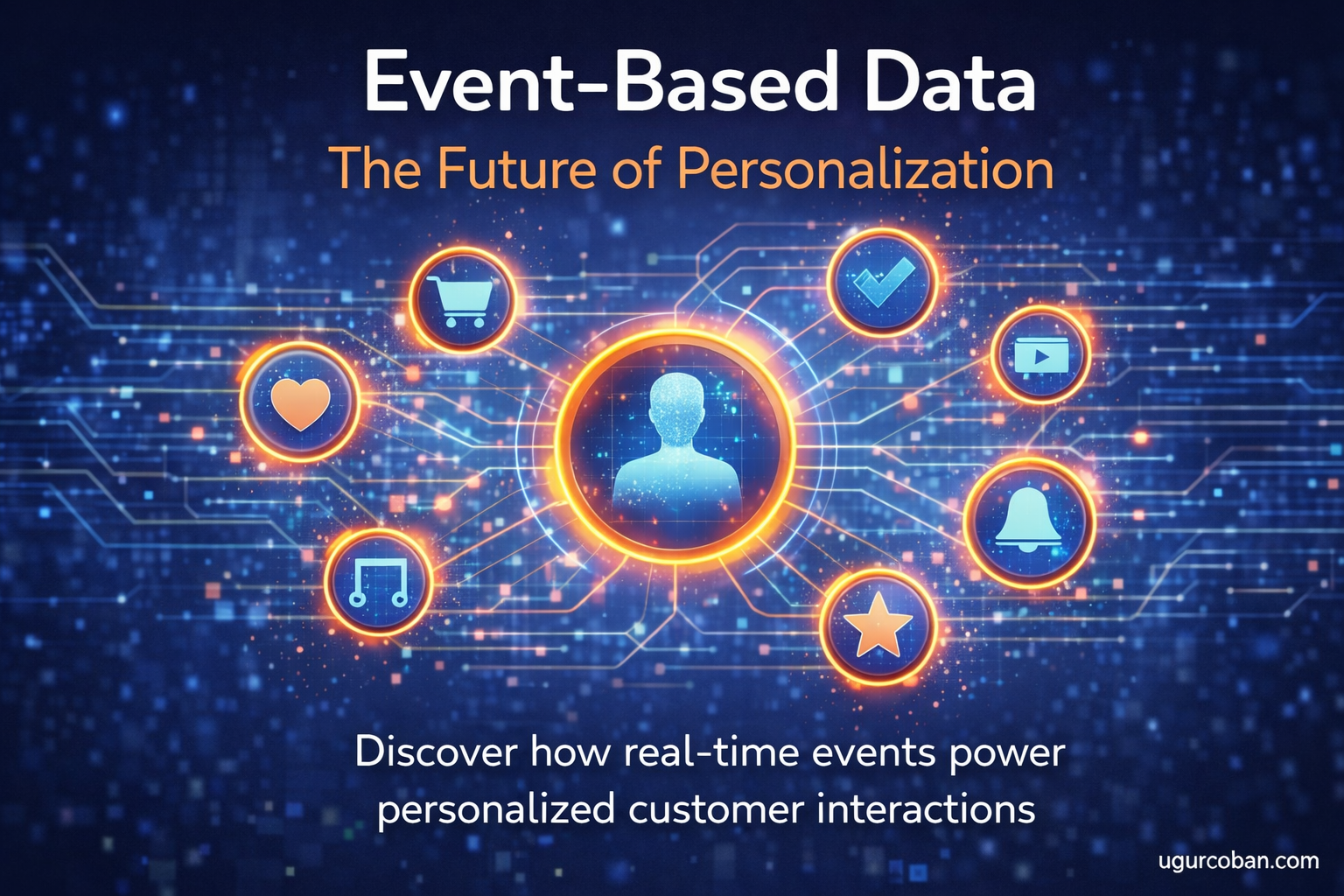
Clicks, pageviews, and basic segments are no longer enough to power real personalization. Modern growth teams now rely on event-based data to understand intent, predict behavior, and trigger real-time experiences. When every action becomes a signal, personalization turns into a competitive advantage. Ready to discover how event-driven intelligence is shaping the future of customer engagement?
For more than a decade, marketers have relied heavily on profile-based data to personalize customer experiences. Demographics, interests, and declared preferences formed the foundation of most targeting strategies. While this worked reasonably well in a world with limited digital touchpoints, today’s customers engage in dozens of micro-interactions across websites, apps, emails, social platforms, and offline channels. As their behavior becomes more dynamic and nonlinear, traditional data structures can no longer keep up. This is where event-based data emerges as the most powerful engine of modern personalization.
Event-based data focuses on the actions users take, not just who they are. Every click, view, search, scroll, purchase, add-to-cart, or abandoned checkout generates a signal. When captured and analyzed in real time, these signals reveal intent, context, and behavioral probabilities far more accurately than static attributes. Instead of assuming who a customer is, brands can observe what customers do—and ultimately predict what they will do next.
Why Event-Based Data Matters Today
Customer expectations have evolved dramatically. People now expect digital experiences to react instantly to their behavior. Netflix recommendations update within seconds. E-commerce websites reorganize product feeds based on recent browsing. Fitness apps adapt training suggestions after every completed workout.
This adaptive experience is only possible through event-based tracking.
Unlike profile-based data that updates occasionally, events create a continuous, real-time feedback loop between the customer and the brand. If a user watches a trailer, opens a push notification, or searches for “comedy events this weekend,” the system immediately learns something new. This allows personalization systems to become fluid, responsive, and deeply contextual—something static data simply cannot achieve.
From Static Segments to Behavioral Micro-Segments
Traditional segmentation groups users into broad categories such as age, location, or purchase frequency. Event-based models, however, enable behavioral micro-segmentation, where groups form dynamically based on real actions.
Examples include:
- Users who viewed an event page twice but did not initiate checkout
- Users who frequently shop after 9 PM
- Users who prefer weekend activities and respond strongly to discount notifications
- Users who add high-value items to cart but rarely convert without a promo code
Each micro-segment represents a unique behavior pattern and intent level.
This granularity allows marketers to craft much more accurate journeys:
Right message → Right user → Right time → Right context
The Power of Real-Time Personalization
Real-time personalization is no longer a nice-to-have—it’s a competitive differentiator. Event-based systems trigger actions the moment a behavior is detected.
Examples include:
- A push notification sent seconds after a user abandons checkout
- A personalized email containing the exact category the user browsed in the last session
- A remarketing ad sequence that adapts based on whether a user clicked, scrolled, or ignored
- A homepage banner that changes instantly according to a user’s previous session history
When personalization happens in seconds, conversion rates increase, user frustration decreases, and retention improves.
Event-Based Data Fuels Predictive Intelligence
Once brands accumulate enough historical event-level data, machine learning models can start predicting behavior—such as:
- Likelihood to purchase
- Likelihood to churn
- Next best product
- Ideal offer type
- Best send time for push or email
- Optimal frequency cap
Predictive metrics like propensity to buy, early-buy score, and lifetime value projections become significantly more accurate when powered by event data. This leads to smarter automation, efficient media spending, and stronger revenue outcomes.
How CDPs Enable Event-Based Personalization
A Customer Data Platform (CDP) is the backbone of event-based personalization. CDPs unify events across all channels into a single user profile, resolve identities, and make the data available to automation tools.
A modern CDP provides:
- Real-time data streaming
- Identity stitching (merging anonymous + logged-in behavior)
- Behavioral segmentation tools
- Activation pipes that push segments to CRM, email, push, ads
- Machine learning models trained on event behavior
Without a CDP, event-based personalization becomes fragmented and difficult to scale.
Use Cases Marketers Can Implement Immediately
Event-based data unlocks dozens of tactical opportunities:
- Browse Abandonment Campaigns
Trigger messages when users exit without taking action. - Interest-Based Recommendations
Suggest products or content based on recent interactions. - Dynamic Frequency Capping
Reduce notifications for users showing negative engagement signals. - Optimized Ad Retargeting
Retarget based on depth of engagement, not just page views. - Milestone-Based Automation
Trigger journeys based on user events—first purchase, first login, first payment failure, etc.
These strategies instantly elevate user experience and revenue performance.
The Future Belongs to Event-Driven Brands
As data privacy regulations tighten, third-party cookies disappear, and customer behavior becomes more fragmented, the brands that thrive will be those that:
- Capture every meaningful micro-interaction
- Process behavioral signals in real time
- Use machine learning to predict intent
- Deliver hyper-personalized experiences instantly
Event-based data is more than a trend—it is the new foundation of customer understanding. For companies investing in CDPs, analytics, and intelligent automation, the future of personalization is incredibly bright.