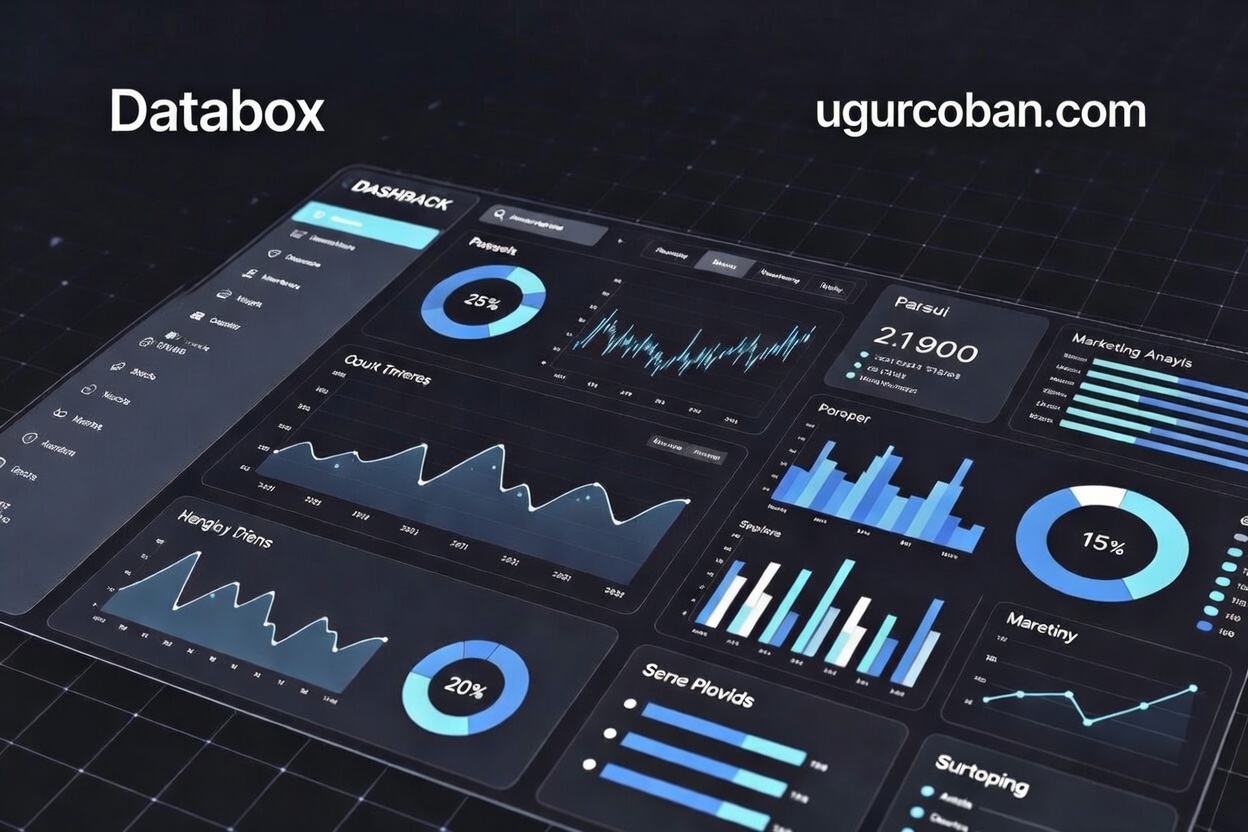
Databox enables organizations to consolidate performance metrics from multiple platforms into real time dashboards that provide clear operational visibility. This guide explores how Databox helps marketing, sales, and product teams monitor performance, automate reporting, and transform fragmented data into actionable insight.
Data has become the backbone of modern digital decision making. Every marketing campaign, product launch, customer interaction, and operational process generates measurable signals. The challenge is no longer collecting data. The real challenge is turning scattered metrics into clear, actionable insight.
Organizations today rely on dozens of platforms to run their operations. Advertising systems, analytics tools, CRM platforms, automation services, and internal databases all generate their own streams of performance data. While each platform offers reporting features, those reports rarely communicate with one another in meaningful ways.
This fragmentation creates a familiar problem. Teams spend enormous amounts of time exporting reports, copying numbers into spreadsheets, creating presentations, and trying to reconcile metrics across different systems. By the time insights are assembled, the opportunity to act may already be gone.
Databox emerged as a solution to this challenge. Instead of functioning as a standalone analytics tool, Databox acts as a centralized visualization and reporting layer that aggregates metrics from multiple platforms into unified dashboards. By connecting data sources and presenting them in a clear visual structure, Databox enables teams to monitor performance in real time without constantly navigating between different tools.
Understanding how Databox works and how organizations can integrate it into their operational workflows is essential for teams that want to move from reactive reporting to proactive performance management. This guide explores the architecture of Databox, its most important capabilities, practical use cases, and the strategic role it plays within modern data driven organizations.
What Databox Is and Why It Exists
Databox is best understood as a data visualization and performance monitoring platform designed to unify metrics from multiple tools into centralized dashboards.
Most digital organizations rely on numerous data sources. Marketing teams track advertising performance across several channels. Product teams analyze user behavior through analytics platforms. Sales teams manage leads and revenue pipelines through CRM systems. Customer success teams track engagement and retention signals.
Each of these systems generates valuable information. However, when data remains isolated within individual tools, decision making becomes fragmented. Teams cannot easily see how different parts of the organization influence one another.
Databox addresses this challenge by connecting to multiple platforms and consolidating their data into customizable dashboards. These dashboards allow organizations to monitor key metrics in a single environment rather than navigating dozens of reporting interfaces.
This approach dramatically reduces the time required to access insights.
Instead of exporting spreadsheets or manually compiling reports, teams can view performance metrics instantly. Leaders gain visibility into campaign performance, pipeline health, user engagement, and operational trends without relying on manual reporting cycles.
What makes Databox particularly effective is its focus on operational visibility rather than deep analytics modeling. The platform is designed to answer a critical question: what is happening right now across our most important metrics? By providing this real time clarity, Databox enables teams to identify trends, detect issues early, and make faster decisions.
Core Features That Define Databox
Databox combines several capabilities that transform raw metrics into meaningful dashboards. These features make the platform particularly useful for organizations that manage multiple data sources.
One of the most important capabilities is data source integration. Databox connects with a wide range of platforms including analytics systems, marketing tools, CRM platforms, and advertising networks. By linking these sources, the platform can automatically pull metrics into a unified dashboard environment.
Once connected, users can create custom dashboards using visual components called Datablocks. Each Datablock represents a specific metric or chart. These components can display values such as traffic, conversions, revenue, pipeline volume, or campaign performance.
Dashboards can be tailored to different roles within an organization. Marketing leaders might track campaign performance across channels. Sales managers might monitor pipeline health and deal progression. Product teams might track user engagement or feature adoption.
Another defining feature is real time performance monitoring. Unlike traditional reporting processes that rely on periodic exports or scheduled reports, Databox updates dashboards automatically as new data becomes available. This allows teams to monitor performance continuously rather than reviewing static reports.
The platform also includes goal tracking functionality. Organizations can define targets for specific metrics and visualize progress toward those goals directly within dashboards. This capability helps teams maintain alignment around performance expectations. Databox also supports automated reporting and alerts. Teams can schedule performance summaries to be delivered through email or messaging channels. Alerts can notify users when metrics exceed or fall below predefined thresholds. This ensures that important changes do not go unnoticed.
These features transform Databox into more than a visualization tool. It becomes a central performance monitoring system that helps organizations stay connected to their most important metrics.
Real World Use Cases Across Teams
Databox is used across a wide range of operational contexts because performance monitoring is relevant to nearly every function within modern organizations.
Marketing teams often rely on Databox to consolidate campaign data from multiple advertising platforms. Instead of checking each advertising interface individually, marketers can view metrics such as impressions, clicks, conversions, and cost efficiency within a single dashboard. This unified perspective makes it easier to identify which campaigns are driving results and which require optimization.
Sales teams benefit from Databox through CRM integrations that visualize pipeline health and revenue performance. Dashboards can display metrics such as new leads, qualified opportunities, deal progression, and closed revenue. Managers can quickly identify bottlenecks within the sales funnel and intervene before performance declines.
Product teams can use Databox to monitor engagement metrics derived from analytics platforms. Dashboards may track daily active users, retention rates, feature adoption, or user journey completion. By visualizing these signals, teams gain immediate feedback about how users interact with digital products.
Operations teams often deploy Databox as a central monitoring hub for organizational performance. Key metrics from multiple departments can be aggregated into executive dashboards that provide leadership with a high level overview of organizational health.
Another powerful use case involves client reporting environments. Agencies or service providers frequently use Databox to create dashboards that clients can access directly. Instead of sending static reports, teams provide clients with real time visibility into campaign performance and operational metrics. These use cases demonstrate how Databox functions as a cross functional visibility layer. Rather than replacing existing tools, it enhances them by making their data accessible in a unified format.
Advantages and Limitations of Databox
Every platform introduces benefits as well as constraints. Understanding both allows organizations to implement Databox strategically rather than expecting it to solve every data challenge.
One of the platform’s most significant advantages is clarity. Databox excels at turning complex streams of metrics into easily understandable dashboards. This clarity helps teams focus on what matters rather than becoming overwhelmed by data.
Another major benefit is speed of insight. Because dashboards update automatically, teams can detect performance shifts immediately. This responsiveness enables faster decision making and reduces reliance on manual reporting processes.
Databox also improves organizational transparency. When dashboards are shared across teams, everyone gains visibility into key performance indicators. This shared awareness encourages alignment and accountability.
However, Databox is not designed to replace advanced analytics platforms.
For deep statistical modeling, predictive analysis, or large scale data processing, organizations typically rely on specialized analytics environments or data warehouses. Databox operates at a different layer of the data ecosystem.
Its strength lies in monitoring and visualization rather than heavy data transformation.
Another limitation involves data dependency. Databox relies on the accuracy and availability of connected data sources. If underlying systems contain inconsistencies or delays, those issues will be reflected in the dashboards.
Finally, as organizations scale their dashboards, governance becomes important. Without clear structures and naming conventions, teams may create overlapping dashboards that reduce clarity rather than improve it. Recognizing these limitations helps organizations position Databox appropriately within their technology stack.
When Databox Becomes a Strategic Performance Layer
Databox delivers its greatest value when organizations move beyond basic dashboards and begin using it as a central performance monitoring system. In mature implementations, dashboards are carefully designed to reflect the most important indicators of organizational health. Instead of displaying dozens of disconnected metrics, dashboards focus on signals that directly influence decision making.
This shift transforms Databox from a reporting convenience into a strategic operational layer. Leadership teams can observe trends across marketing, sales, product, and operational metrics simultaneously. This visibility enables faster responses to emerging opportunities or potential risks. Another powerful advantage emerges when dashboards are integrated into daily workflows. When teams regularly monitor performance metrics, decision making becomes data informed rather than intuition driven. This cultural shift toward continuous measurement often produces significant improvements in organizational efficiency.
Databox does not replace analytics tools, data warehouses, or reporting platforms. Instead, it complements them by providing an accessible interface where critical insights become visible to the entire organization.
As digital ecosystems grow more complex and data continues to multiply, platforms that simplify performance visibility will become increasingly valuable. Databox represents one of the most effective solutions for organizations seeking to transform fragmented metrics into a clear operational narrative.